
Abstract : Driven by the dual impetus of accelerated urbanization and the popularization of intelligent technologies, the demand for refined water resource management has become increasingly prominent—especially for the real-time monitoring of roof water tanks in high-rise buildings. Traditional level monitoring equipment mostly adopts mechanical float switches or conductive sensors. However, these devices are prone to increased measurement errors or even failure due to rain erosion, metal corrosion, and other factors during long-term outdoor use. In recent years, non-contact ultrasonic level sensors have gradually emerged as the mainstream solution in the tank level monitoring field, thanks to their strong anti-interference capabilities and low maintenance costs.
The working principle of ultrasonic level sensors is based on acoustic reflection characteristics: the sensor emits high-frequency ultrasonic pulses toward the liquid surface. When the sound waves encounter the liquid surface, they reflect back. By calculating the time difference between the emission and reception of the echo, combined with the speed of sound propagation in air, the sensor can accurately deduce the liquid level height. This non-contact measurement method completely isolates the sensor from direct contact with the liquid, fundamentally avoiding issues such as chemical corrosion and biological contamination. It is particularly suitable for outdoor environments with strong acids or alkalis, as well as scenarios requiring strict hygiene standards. Test data from a technical team shows that even under extreme temperature conditions ranging from -20℃ to 60℃, the measurement error of such sensors can still be controlled within ±0.5%.
To address the specific installation requirements of roof water tanks, the sensor typically adopts a top-opening design, with customized mounting brackets ensuring the acoustic emission path is perpendicular to the liquid surface. A renovation case from a property management company shows that after replacing traditional float sensors with ultrasonic devices, the update frequency of tank level data increased from once per hour to once per minute, while the annual maintenance frequency decreased from 12 times to 2 times. More importantly, integrated with IoT modules, the sensor can upload real-time data to a cloud platform. Managers can check the level status of multiple projects nationwide via a mobile APP, and automatic alarm notifications are triggered when the water level drops below the set threshold.
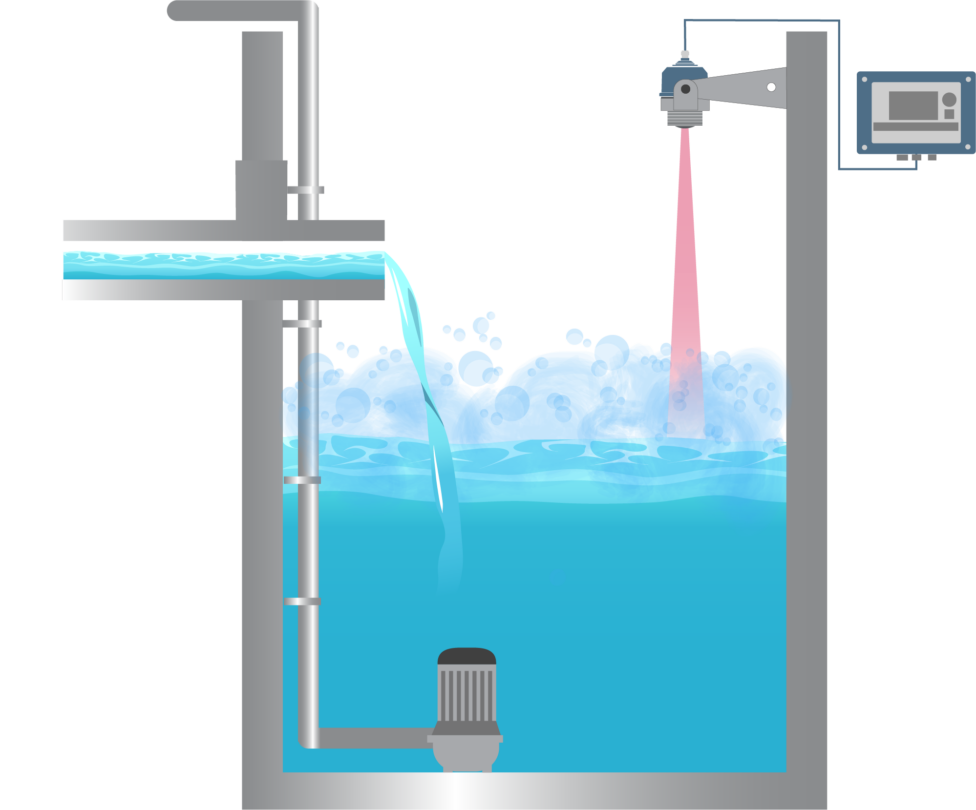
As a flagship product independently developed by DYP Technology Co., Ltd, the L07A Ultrasonic Level Sensor Module perfectly resolves industry pain points such as “difficult installation, poor environmental resistance, and slow data response” in outdoor roof tank level monitoring, relying on its core advantages of “small blind zone, high precision, and strong adaptability.” Its compact size fits various tank installation scenarios, while the IP67 protection rating for dust and water resistance, coupled with a long service life, ensures stable operation under complex outdoor conditions such as wind, rain, and temperature fluctuations. It provides all-weather reliable guarantee for the accurate level monitoring of roof water tanks and the rational allocation of water resources.
In the future, DYP Technology will continue to focus on ultrasonic sensing technology innovation, empowering fields such as water conservancy, construction, and domestic water supply with products more aligned with practical application needs, and helping build an efficient and intelligent new ecosystem for level management.
Post time: Dec-13-2025